Heat, cool and shake — right on the deck.
A family of compact heating, cooling and shaking modules built for the decks of automated liquid handlers. Internal control electronics, a single-slot footprint and an open RS-485 interface — integration without an external controller.
5,000rpm
Max mixing speed
0–120°C
Thermal range across the family
±0.1mm
In-situ positioning accuracy
140 × 98mm
Single-slot deck footprint
One deck footprint. Four modules, ten configurations.
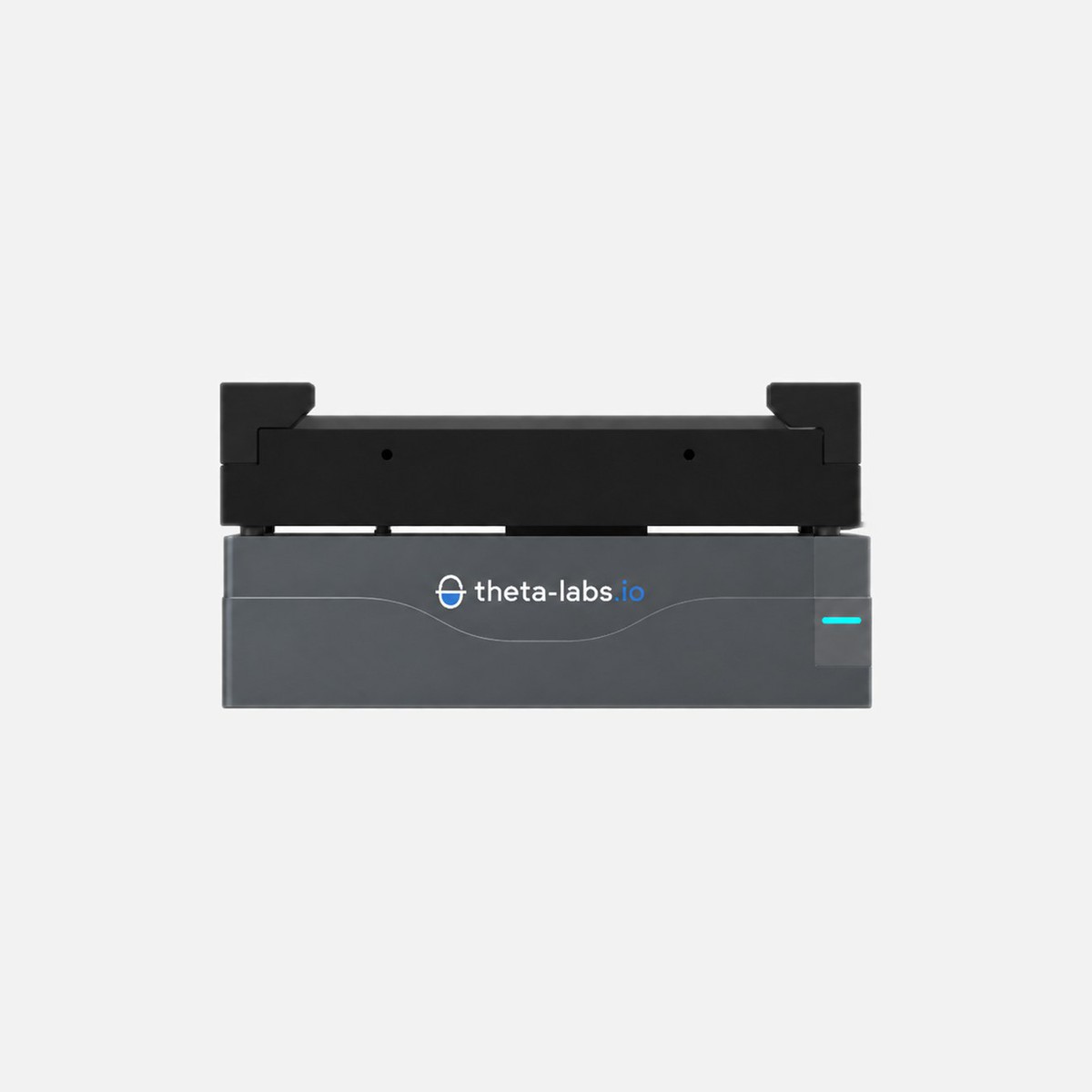
thetaShake
Pure orbital mixing in the family's lowest-profile body — beads, reagents and viscous liquids from 200 to 5,000 rpm, in either direction, programmable on the module, with no temperature control and no external controller.
View details →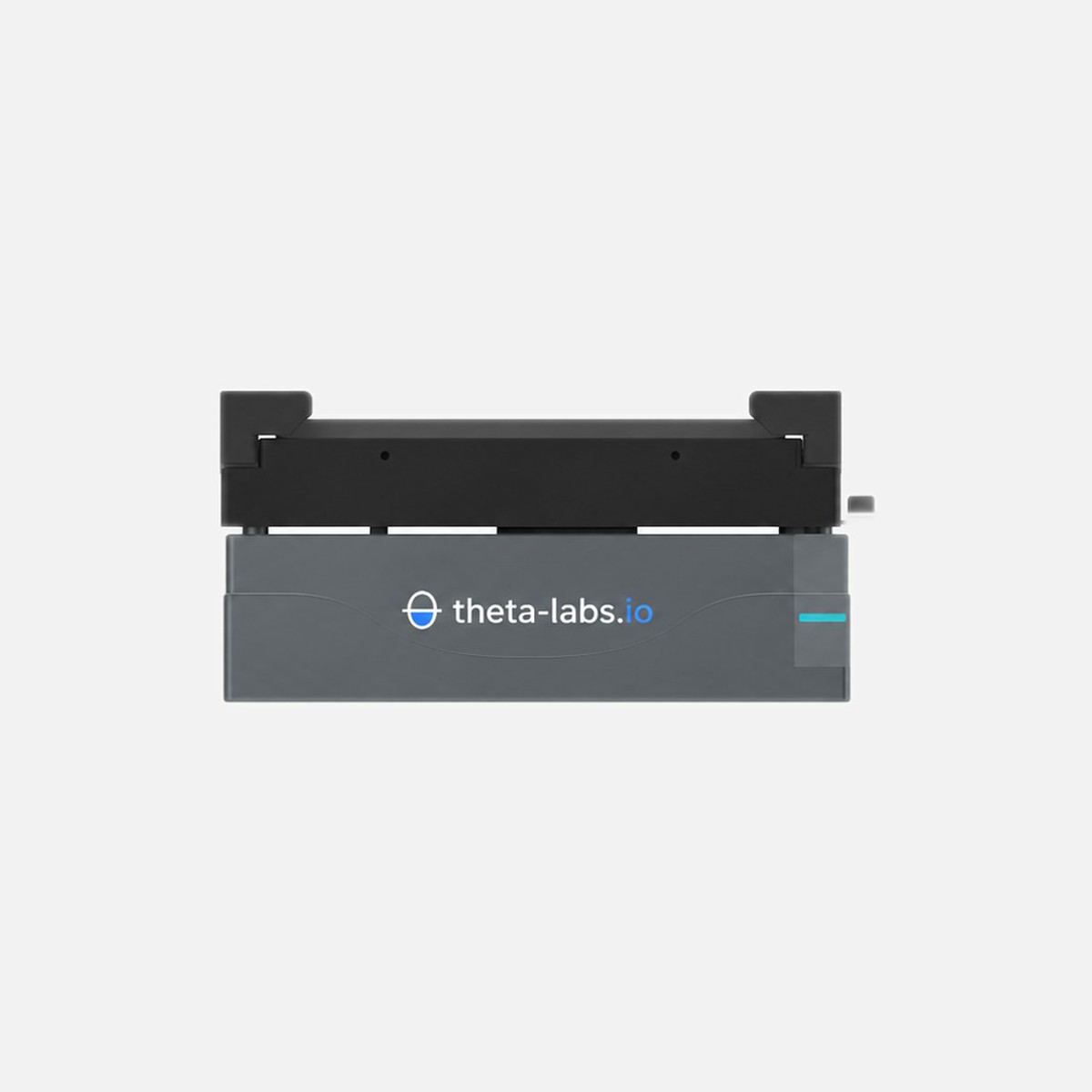
thetaShake HT
Simultaneous heating and shaking in one deck slot — drive to 99 °C while mixing clockwise or counterclockwise, compressing incubation steps from hours to minutes, with no external controller.
View details →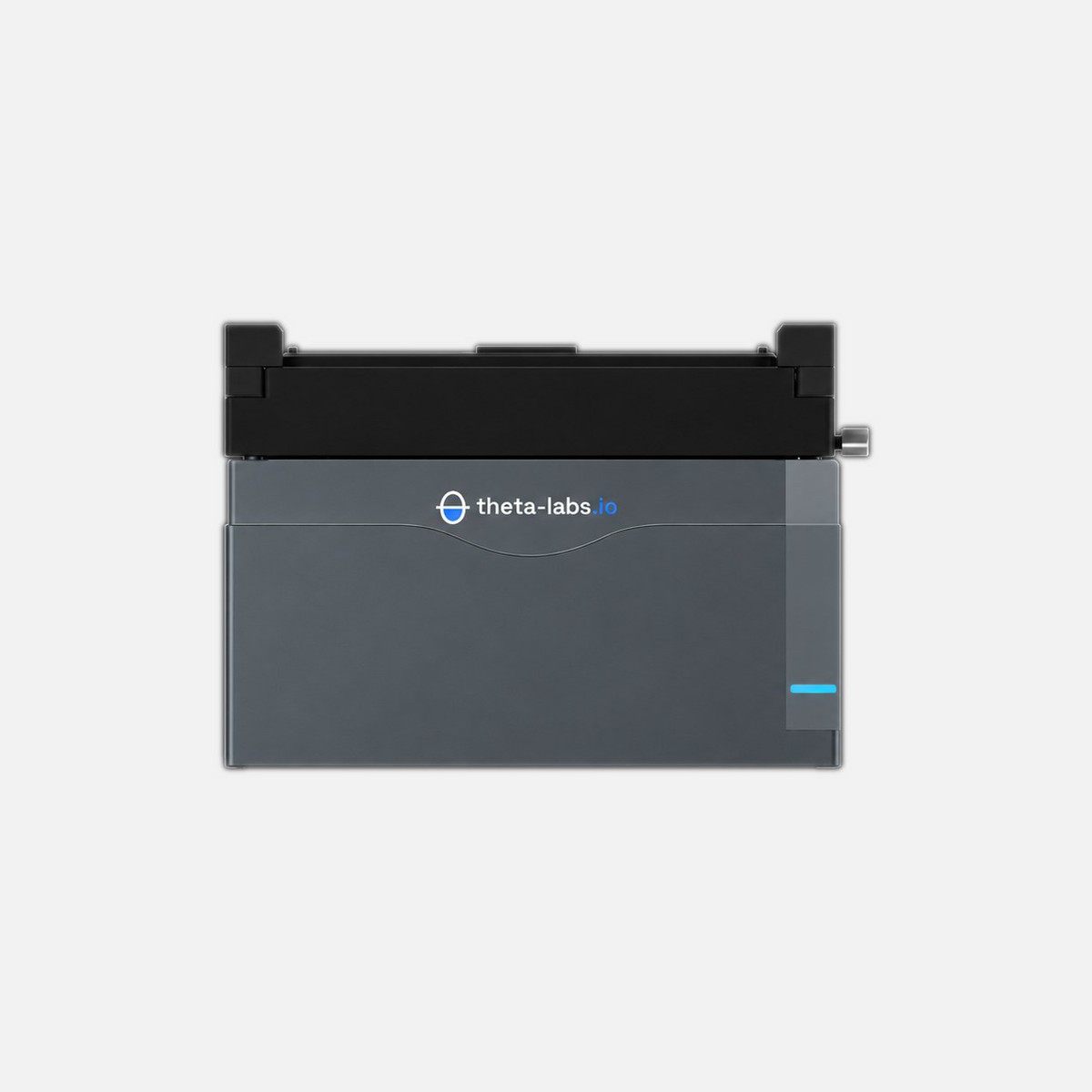
thetaFlex
Heat, cool and shake in one deck slot. Solid-state temperature control from 4 to 99 °C with bidirectional orbital mixing up to 5,000 rpm — no water bath, no external controller.
View details →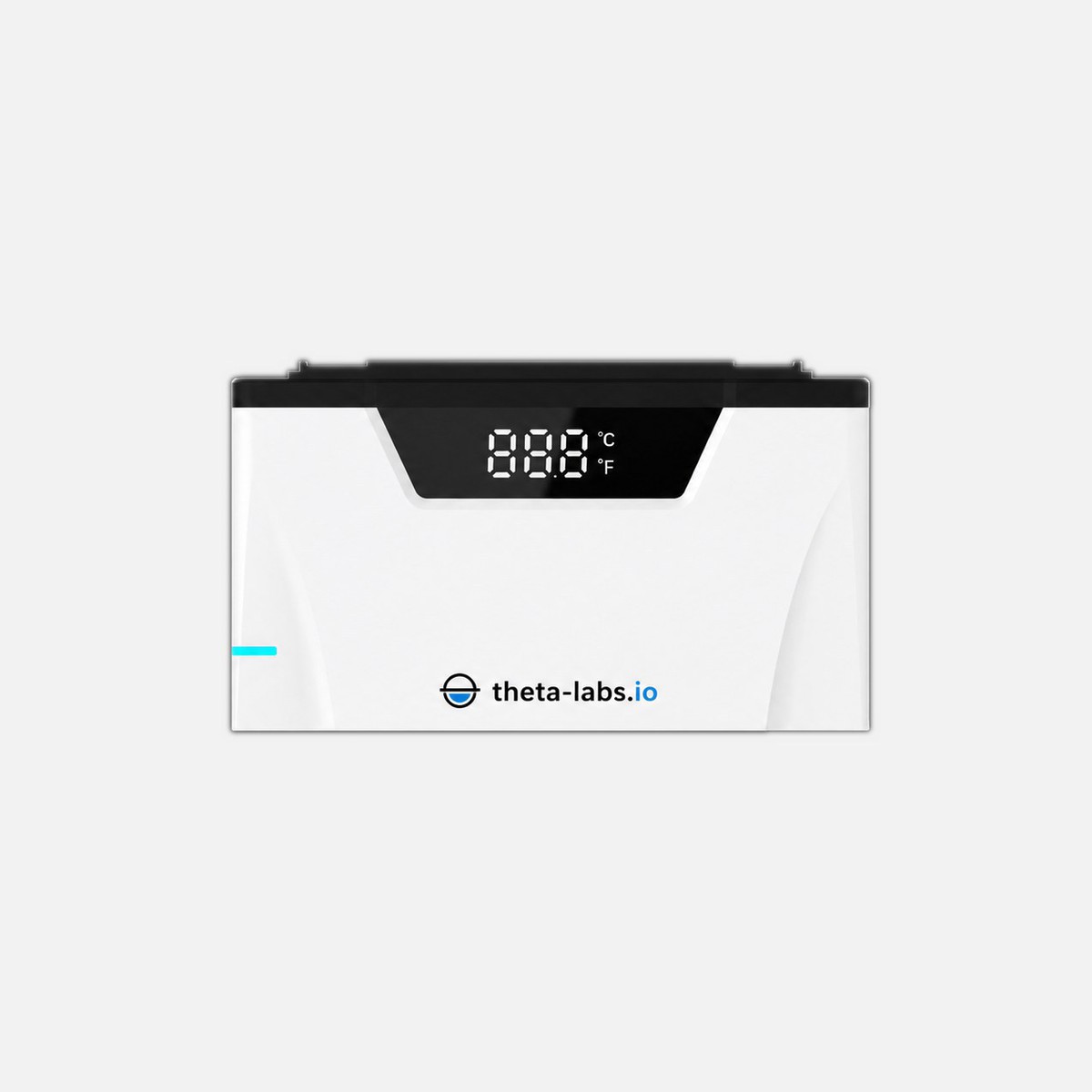
thetaTemp
Solid-state heating and cooling across the widest range in the family — 0 to 120 °C with ≤±0.2 °C control, no shaking and no external controller. Set it once and it holds that temperature every time it's powered, on a deck or on the bench.
View details →Three questions to the right module.
What the protocol has to do — mix, heat, cool — decides the module. The labware you shake decides the speed configuration: tighter orbits for denser plates, wider orbits for larger volumes.
Answer the questions and the matching module — and its speed configuration — appears here.
01
Home, lock, hand off
Every stop ends at a defined zero position, held by a solenoid lock, so the gripper finds the plate in the same place run after run — automatic in-situ positioning to ±0.1 mm with automatic clamping, at any mixing frequency.
02
Flexible shaking, in either direction
Three orbital amplitudes — 1.2, 2.0 and 3.0 mm — across 200 to 5,000 rpm at ±25 rpm, clockwise or counterclockwise, with a ramp you set from 1 to 10 seconds. From low-viscosity buffers to dense bead slurries.
03
Programmable mixing, on the module
Store a two-phase routine — direction, speed and time for each phase, repeated as many times as you like — and run it with one command. Timed runs up to 48 hours stop themselves.
04
Rapid, precise temperature control
Fast heating and cooling with control to ≤±0.2 °C and tight well-to-well uniformity — from 4 °C reagent storage up to a 120 °C working range, depending on module. Hold timers run up to 11 days, then switch off on their own.
05
Plug-and-play — no external controller
Control electronics live inside the module. Each unit runs directly from the host computer over standard RS-422/485, and up to 31 modules share one bus and one USB port, each answering to its own address.
06
Talks back
Actual speed, direction, clamp state, block, heat-sink and ambient temperatures and 24 named fault codes are readable on demand — so your scheduler knows what happened, not just that a step timed out.
07
Three ways to stop
Stop mixing while the block holds temperature, switch the heater off while the wash keeps mixing, or halt both at once with a single emergency stop — settings survive every one, so the next start needs no setup.
08
Broad labware compatibility
SBS microplates from 1 to 384 wells, 1.5/2 mL centrifuge tubes, PCR strips and reagent reservoirs — plus custom thermal adapters for deep-well plates, tube racks and microfluidic chips.
Set it up, start it, ask how it's going.
Every module is a complete instrument on the bus. The host writes the parameters once, fires a single command, and reads back the state whenever it wants — the module does the rest, including stopping itself.
Clockwise or counterclockwise
Pick the orbit direction per run. Reversing between steps changes the flow in the well and lifts beads off the wall instead of packing them on one side.
Two-phase programs
Phase A and phase B, each with its own direction, speed and duration, repeated N times. One command runs the whole routine on the module.
Timed runs to 48 hours
Start for a set number of seconds and the module stops itself. Read the time remaining at any point. A dropped connection never leaves a plate shaking.
Adjustable ramps
Spin up and down over 1 to 10 seconds. Short for sealed plates, long and gentle for open reservoirs and deep-well plates.
Speed guardrails
Store an upper and lower speed limit inside the module. A method that asks for more is refused by the firmware, not discovered at the bench.
Home and lock
Return to zero and lock for a plate transfer, or park unlocked. The status register tells you which state the platform is in.
Live readback
Actual versus target speed, direction, ramp, timer remaining, clamp state — and on heated modules three temperatures and the controller state.
Named faults
Twenty-four fault codes, from motor overcurrent to a heat sink over 70 °C, reported together with a cause and a suggested action, and cleared remotely.
31 modules, one port
Addresses 2 to 32 on one RS-422/485 bus. Assign addresses by serial number without unplugging anything.
Standalone mode
Heated and cooled modules can hold a stored setpoint every time they're powered, with no host at all. Set it once from a phone; run it on the bench.
Three ways to stop
Stop mixing and keep the temperature. Switch the heater off and keep mixing. Or halt both with one emergency stop. Nothing is forgotten, so the next start needs no setup.
Open REST API
The ODM Hub wraps the bus in HTTP and WebSocket, with an OpenAPI spec you can generate a client from. Drivers for the major schedulers on request.
A compact body with the controller already inside.
Every module keeps the same 140 × 98 mm footprint and integrates its PCBA internally — so a workstation gains heating, cooling or shaking without surrendering a deck position to a separate control box. Selectable cable routing keeps dense layouts clean.
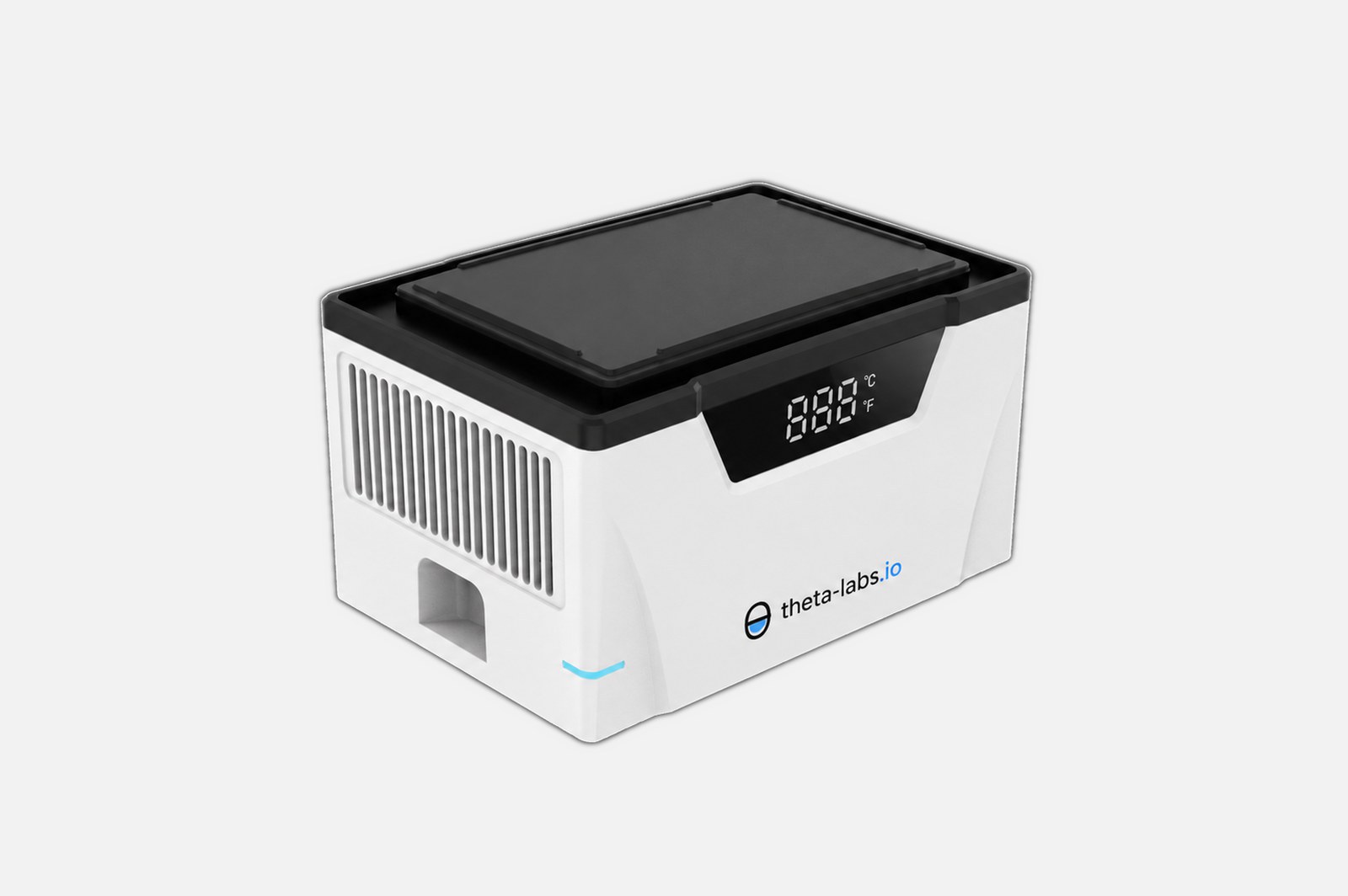
- 1 Direct-contact platform. A solid-state block drives the labware directly for fast, uniform transitions across 0–120 °C — with over 200 interchangeable adapters to fit any plate, tube or reservoir format.
- 2 Seeing is believing. A clear on-board readout — no more staring at a string of text trying to decipher it.
- 3 Solid-state heat exchange. Heating and cooling handled inside the body — no water bath, no external chiller.
- 4 RS-485/422 industrial bus. A rugged industrial bus architecture for fast, two-way, uninterrupted communication — with selectable cable routing to keep dense decks clean.
One serial bus, cabled your way.
Every module speaks RS-422/485 — a rugged, addressable multi-drop bus. Chain a deck of modules onto one bus and bridge it to the workstation PC through a single USB adapter; the host talks to each module by address, with no external controller in between. Power stays per-module — pick the connector that fits the build.
A standard AC→DC power brick per module and an RS-422/485 cable to a USB adapter on the PC. Nothing else to install.
A single M12 connector carries each module's 24 V and RS-485 in one rugged cable — with the current headroom for the 120 W heated and cooled modules. Bus them along a backbone and bridge the run to the PC over USB, one tidy chain instead of a bundle of leads. M8 is available for low-power modules where a smaller connector helps.
The workstation PC only exposes USB, so the RS-485 bus always terminates at a USB bridge — the same simple pattern whichever connector you choose.
Compare the family.
| Specification | thetaShake · TL-S | thetaShake HT · TL-HS | thetaFlex · TL-TS | thetaTemp · TL-T-00 |
|---|---|---|---|---|
| Temperature range | — | RT+5 – 99 °C | 4 – 99 °C | 0 – 120 °C |
| Temperature accuracy | — | ≤ ±0.2 °C | ≤ ±0.2 °C | ±0.2 °C |
| Uniformity | — | ≤ ±1.0–2.0 °C | ≤ ±1.0–2.0 °C | ≤ ±0.5–2.0 °C |
| Heating rate | — | ≥ 12 K/min | ≥ 11 K/min | ≥ 8 K/min |
| Cooling rate | — | — | ≥ 13 K/min | ≥ 11 K/min |
| Max mixing speed (2K/3K/5K) | 2,000 / 3,000 / 5,000 rpm | 2,000 / 3,000 / 5,000 rpm | 2,000 / 3,000 / 5,000 rpm | — |
| Amplitude (2K/3K/5K) | 3.0 / 2.0 / 1.2 mm | 3.0 / 2.0 / 1.2 mm | 3.0 / 2.0 / 1.2 mm | — |
| Positioning | ±0.1 mm, auto clamp | ±0.1 mm, auto clamp | ±0.1 mm, auto clamp | — |
| Direction | CW / CCW | CW / CCW | CW / CCW | — |
| Timer & program | 48 h · 2-phase | 48 h · 2-phase | 48 h · 2-phase | — |
| Acceleration ramp | 1 – 10 s | 1 – 10 s | 1 – 10 s | — |
| Hold timer | — | ≤ 11.5 days | ≤ 11.5 days | ≤ 11.5 days |
| Standalone mode | — | ✓ | ✓ | ✓ |
| Readback & faults | ✓ · 24 codes | ✓ · 24 codes | ✓ · 24 codes | ✓ · 24 codes |
| Stops | E-stop · mix | E-stop · mix · temp | E-stop · mix · temp | E-stop · temp |
| Modules per port | 31 | 31 | 31 | 31 |
| Dimensions (W×D×H) | 140 × 98 × 56 mm | 140 × 98 × 60.6 mm | 140 × 98 × 98 mm | 140 × 98 × 81 mm |
| Max power | 35 W | 120 W | 120 W | 120 W |
| Supply | 24 V DC | 24 V DC | 24 V DC | 24 V DC |
| Interface | RS-422 / RS-485 | RS-422 / RS-485 | RS-422 / RS-485 | RS-422 / RS-485 |
All modules support SBS-size microplates (1–384 wells), 1.5/2 mL tubes, PCR strips and reservoirs. Shaking modules come in three speed configurations — 2K (3.0 mm), 3K (2.0 mm) and 5K (1.2 mm).
From sample prep through detection.
Deployed across automated workflows where mixing and temperature drive the result — NGS library prep, nucleic acid extraction, flow cytometry, PCR and ELISA.
Put the workflow on deck.
Tell us the handler and the assay — we'll help you spec the right modules and adapters, and get you evaluation units.
Book a Virtual Demo